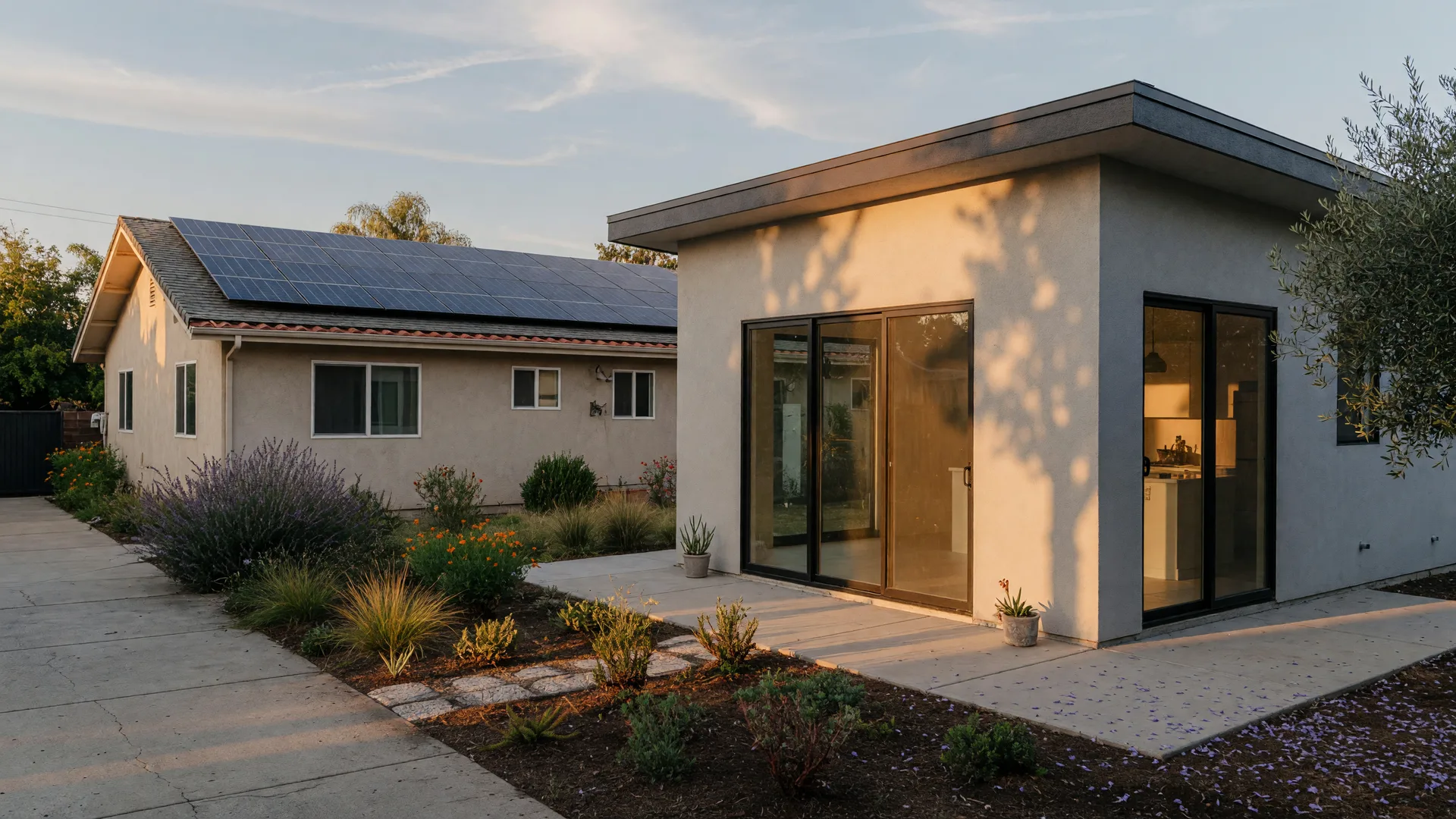
Can I Build a Detached ADU?
By JC Pacific Corp Published 2026-09-01 Last professionally reviewed: September 2026
Many California properties may qualify for a detached ADU. The permitted size, height, setbacks, placement, and review process depend on current state law, local standards, lot conditions, and the existing property.
What site issues matter?
- Rear and side setbacks
- Front-yard limitations
- Easements
- Lot coverage
- Trees
- Slope
- Drainage
- Fire access
- Coastal regulations
- Septic capacity
- Utility connections
- Privacy
- Construction access
- Existing accessory buildings
How large can a detached ADU be?
State law protects the ability to build qualifying ADUs of specified minimum dimensions and limits some local size restrictions. The exact permissible size depends on bedrooms, local ordinance, zoning, and project type.
Can the ADU be two stories?
Height allowances depend on location, proximity to transit, relationship to an existing multifamily building, and current state and local rules.
Frequently Asked Questions
Does a detached ADU require a separate foundation?
Yes, it requires an approved structural foundation appropriate to the design and site.
Can it have separate utilities?
Possibly. Separate metering and connection requirements vary.
Can it be placed next to a pool?
Only when required setbacks, access, safety, and code standards are met.
Educational information
This content is for general educational purposes and is not legal, tax, appraisal, lending, electrical, engineering, construction, insurance, investment, utility-rate, zoning, architectural, or solar-production advice. California ADU laws, local ordinances, permit requirements, utility rules, tax provisions, solar programs, and financing standards change frequently. Consult appropriately licensed legal, tax, lending, insurance, appraisal, real estate, architectural, engineering, electrical, solar, and construction professionals regarding a specific property.
Next step: Compare detached construction with attached and conversion options before selecting plans.
Related guides
All 25 guidesPut this guide to work
The next step is a conversation with a local agent.
JC Pacific Corp is an Irvine-based Southern California brokerage helping buyers navigate offers, escrow, and financing. Tell us what you are looking for and we will point you to current options across the region.
A note on legal advice: These guides provide general, educational information about California real estate practice. They are not legal advice and do not create an attorney-client relationship. Mortgage information is general education, not individualized lending, tax or legal guidance. For advice about your specific offer, contract, closing or financing, consult a qualified California real estate attorney and a qualified mortgage professional.
A note on these solar and ADU guides: These articles provide general, educational information about California solar systems, PACE assessments, and accessory dwelling units. They are not legal, tax, appraisal, lending, electrical, engineering, construction, insurance, investment, utility-rate, zoning, architectural, or solar-production advice. A PACE assessment is an obligation repaid through a property-tax-bill assessment, not an ordinary solar loan, and California's active-solar property-tax exclusion is not permanent. No article guarantees solar production, savings, contract transfer, ADU value, or rental income. An address, a tax record, or an MLS listing never proves that an ADU is legal, and an unpermitted unit generally does not become legal through age or continued use. Verify current ADU law, local ordinances, permit requirements, utility rules, tax provisions, solar programs, and lending standards at publication time and again before any future update or transaction. Buyers and owners can request brokerage assistance in English, Simplified Chinese, and Traditional Chinese.