25 plain-English articles · Last reviewed September 2026
California Wildfire Risk & Fire Insurance Resource Center
Wildfire hazard and fire insurance can shape whether a California home is affordable, can be financed, and can close on time. This resource center collects 25 plain-English articles that walk California buyers and sellers through the wildfire topics they are most likely to meet: buying in a wildfire area, checking a property's hazard, fire maps and the difference between hazard and risk, insurance and mortgage approval, value and seller disclosures, defensible space and Zone Zero, home hardening, roofs, vents, windows, decks and fences, landscaping, Safer From Wildfires and insurance discounts, the FAIR Plan and DIC coverage, nonrenewal, seller preparation, and a complete buyer checklist. Every article starts with a direct answer, keeps question-shaped headings, and ends with its own contextual next step. No article predicts that a particular home will burn, describes any mitigation measure as a guarantee, quotes a premium or discount without current official verification, or characterizes a real estate professional as a firefighter, insurance agent, fire scientist, building inspector, or wildfire assessor. A Fire Hazard Severity Zone describes broader physical conditions, and hazard is different from the individualized risk a property faces under current conditions. Local fire authorities, counties, and cities may enforce rules stricter than state guidance. For a specific property, consult the official state or locally adopted map and current CAL FIRE, California Office of the State Fire Marshal, and California Department of Insurance resources, and direct underwriting and coverage questions to a California-licensed insurance professional. These guides are general education, not legal or coverage advice.
There is no single wildfire answer for a California home. The official Fire Hazard Severity Zone map tells you where an area is classified, but hazard describes broader physical conditions, while risk considers what could happen to a particular structure under current conditions. Your result depends on the property's construction, vegetation, maintenance, access, neighboring parcels, insurance underwriting, lender standards, and local rules, which can be stricter than state guidance. No map predicts which house will burn, and no home or mitigation measure can be represented as wildfire-proof. Property DNA is one supporting research service that can provide preliminary property information as part of due diligence. It is not a fire-risk report, an NHD report, an inspection, an appraisal, an insurance determination, or a substitute for official maps and local agencies. These guides are general educational information, not insurance, legal, fire-science, or financial advice, and the brokerage and its real estate professionals are never firefighters, insurance agents, fire scientists, building inspectors, or wildfire assessors. Official resources: the California Office of the State Fire Marshal Fire Hazard Severity Zones, CAL FIRE Defensible Space, CAL FIRE Ready for Wildfire, the California Department of Insurance Wildfire Resources, Safer From Wildfires, the California FAIR Plan, and local fire departments, fire protection districts, counties, cities, and emergency-management and evacuation authorities. Recheck current requirements and controlling maps at the time of your application.
Buying in a wildfire area
Start with the full picture of what wildfire due diligence involves: the questions to investigate, the sources to use, and how hazard differs from the individualized risk of a particular property.
Fire maps, hazard, and risk
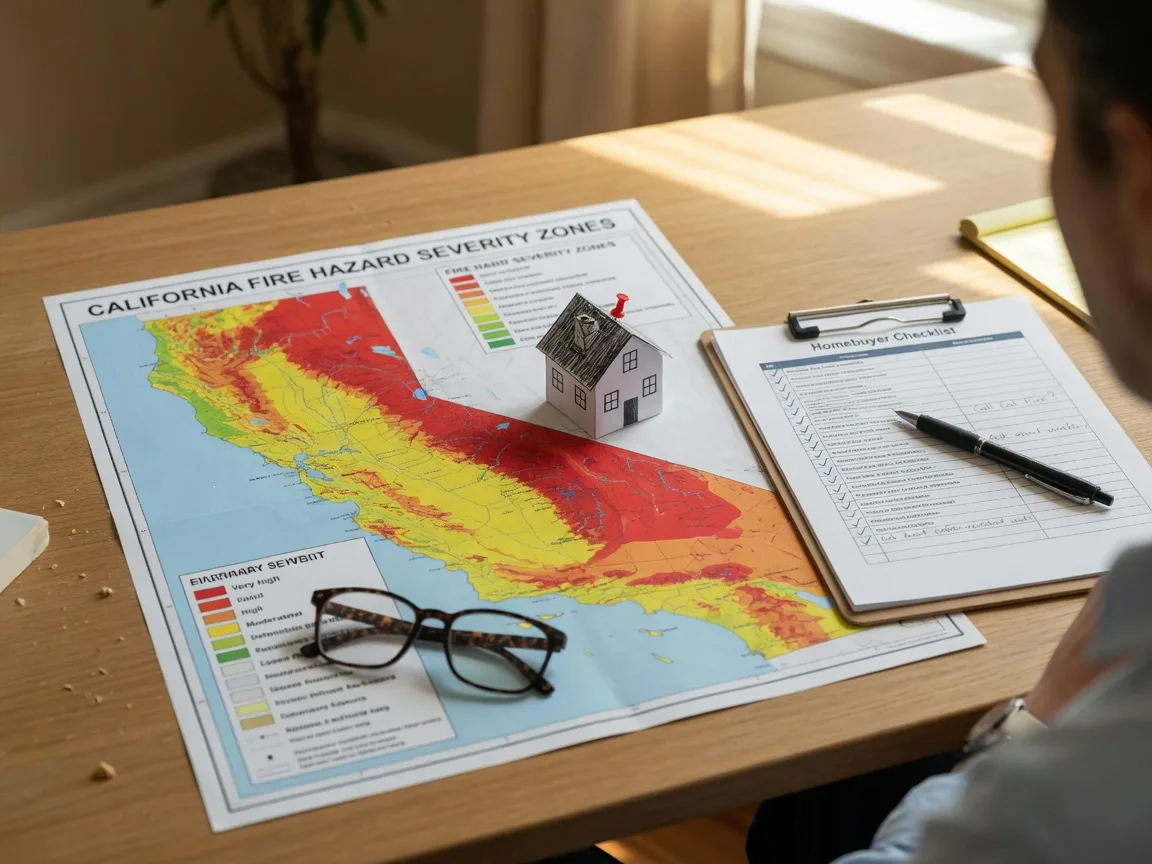
Understand California Fire Hazard Severity Zones, the Very High designation, and the wildland-urban interface, and why a mapped hazard is not a prediction that any single home will burn.
Insurance and mortgage approval
Wildfire exposure can change insurance availability, cost, and renewal, so timing and coverage matter to both affordability and whether a lender can fund the loan.
Value and seller disclosures
Wildfire considerations can influence how a home is valued and what a seller must disclose. Neither a fire-zone label nor a review of value is an appraisal or a substitute for accurate disclosures.
Defensible space and Zone Zero
Defensible space is the managed buffer around a structure, and Zone Zero is the critical first five feet. Both are recurring maintenance, not a guarantee against loss.
Home hardening
Home hardening improves how a structure resists embers, radiant heat, and flame through materials, design, retrofits, and maintenance. Hardening reduces vulnerabilities but cannot make a home fireproof.
Roofs, vents, windows, decks, and fences
Individual building components and where combustible materials meet the structure deserve targeted review, from the roof and vents to windows, siding, decks, and attached fencing.
Landscaping
Wildfire-safer landscaping focuses on fuel reduction, spacing, and plant condition. No plant is fireproof, and even well-watered vegetation can burn under extreme conditions.
Safer From Wildfires and insurance discounts
Documented mitigation may qualify for carrier-specific recognition, but no program guarantees a discount, coverage, or renewal. Eligibility and verification are carrier- and policy-specific.
FAIR Plan and DIC coverage
When standard-market coverage is unavailable, the California FAIR Plan and a separate Difference in Conditions policy may be part of the picture. They must be reviewed together and are not identical to a comprehensive homeowners policy.
Nonrenewal
A nonrenewal means the insurer does not intend to continue the policy after its term. Review the notice immediately, correct what you can, shop for replacement coverage, and seek official assistance when appropriate.
Seller preparation
Sellers in wildfire areas should organize accurate disclosures, insurance and mitigation records, and maintenance records, and avoid unsupported claims that a home is safe, fireproof, or guaranteed insurable.
Complete buyer checklist
Finish with a checklist covering maps, insurance, structure, parcel, community, disclosures, and long-term ownership expenses, used before releasing applicable investigation, insurance, or financing protections.
Related guides
California Homeowners Insurance Resource Center
A complete homeowners insurance resource for California buyers: coverage, exclusions and separate policies, deductibles, replacement cost, claims history, lender requirements, and a full checklist.
Open the GuideRelated guides
California Home Inspections & Buyer Due Diligence
Inspections, disclosures, appraisals, and due-diligence steps that pair with wildfire and fire-insurance review before buyer protections expire.
Open the GuideRelated guides
California Mortgages, Loan Approval & Financing
How loan approval, lender requirements, homeowner insurance, flood insurance, and final underwriting intersect with evidence of coverage at closing.
Open the GuideRelated guides
California Seller Disclosures & Property Risks
How disclosure duties, natural-hazard reports, and property-risk information apply in a California transaction.
Open the GuideRelated guides
California Title, Escrow & Closing Fundamentals
Closing steps, final documents, prorations, and safe funding, including where insurance evidence fits before final signing.
Open the GuideRelated guides
Fraud Prevention & Safe Closings
Wire-fraud protection, identity verification, and a complete California closing-security checklist.
Open the GuidePut the guide to work
Turn the wildfire guide into property-specific due diligence.
JC Pacific Corp is an Irvine-based brokerage serving buyers, sellers, and investors across Orange County, Los Angeles, San Diego, and the Inland Empire, with escrow, mortgage, and property-management services around each transaction. A real estate agent can help you organize the investigation period and connect you with resources, but official maps, local fire authority rules, and insurance availability and coverage belong with the responsible agencies and a California-licensed insurance professional. Bring the questions from these articles, your property details, roof and hardening documentation, and inspection findings to those experts, and recheck current state and local requirements before you release buyer protections.